
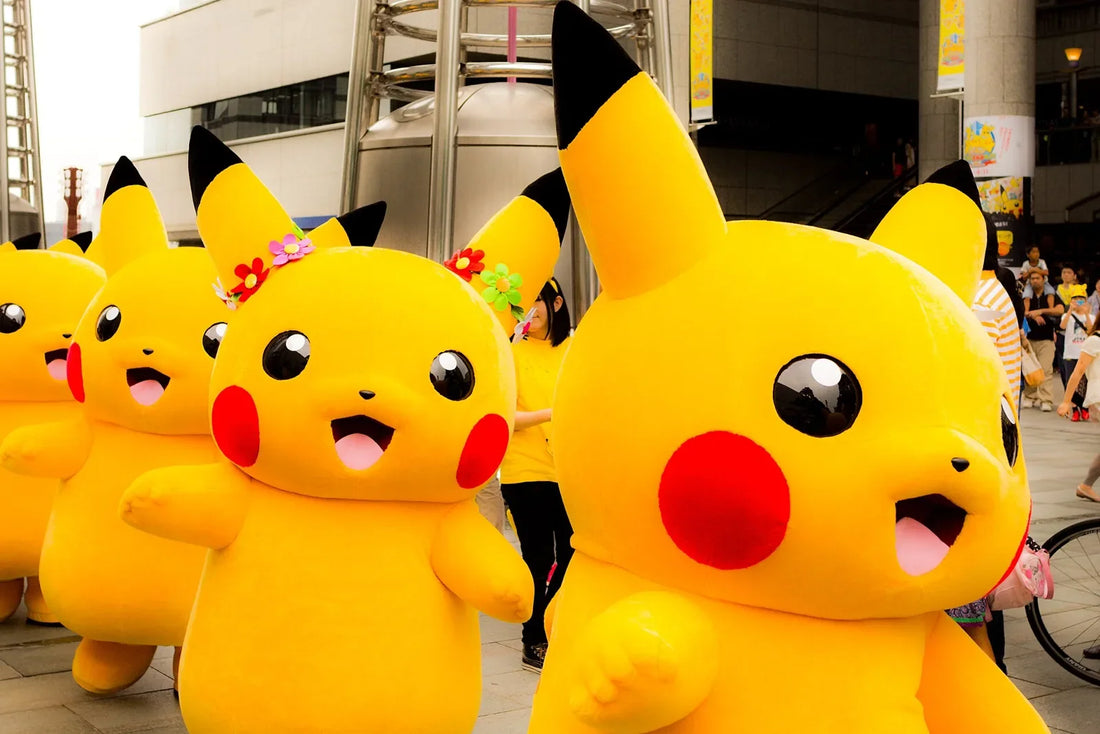
A white cat with a red bow on a pencil case. A black hood with a pink skull on a keyring. A lazy egg on a packet of biscuits at the Asian grocer. Japanese cartoon characters are all over Sydney and Melbourne now, and you can probably name the yellow one at the top of this page, Pikachu, but not many more. Even fans get tangled working out which ones belong together.
Find the face you keep seeing below, with its name and the company behind it. Then where to find them in Sydney and Melbourne, snacks included.
Quick answer
- Who makes themMost come from a few places: Sanrio, the Tokyo company behind Hello Kitty; San-X, a Tokyo company that started in stationery and makes Rilakkuma; Japanese comics and cartoons like Doraemon; and towns with their own mascots.
- The usual mix-upRilakkuma, the sleepy brown bear, isn't Sanrio. Gudetama, the lazy egg, is.
- Getting them hereCharacter shops in Sydney's Haymarket and George Street and in central Melbourne carry them, and the Japanese grocers sell the snacks. Australia has no official Sanrio shop. Where to look
Which character is that?
Find the one you remember. The name in bold is what to search for, and the line under it says who makes it.
-

Hello Kitty (ハローキティ)
White cat face, a red bow on one ear, no mouth
Sanrio, since 1974.
-

Kuromi (クロミ)
A black hood with jester ears and a pink skull on the front
Sanrio, 2005. She calls herself My Melody's rival.
-

Pompompurin (ポムポムプリン)
A golden dog in a little brown beret
Sanrio, 1996. Top of Sanrio's fan vote in 2025 and 2026.
-

Gudetama (ぐでたま)
An egg yolk lying flat, too lazy to get up
Sanrio, 2013. Not San-X.
-

Rilakkuma (リラックマ)
A round, sleepy brown bear, usually flopped over
San-X, 2003. The white cub is Korilakkuma.
-

Sumikko Gurashi (すみっコぐらし)
A gang of tiny round characters huddled in a row
San-X, 2012. The name means roughly "life in the corner".
-

Doraemon (ドラえもん)
A blue robot cat with no ears, a bell and a white pocket
From the comic by Fujiko F. Fujio.
-

Anpanman (アンパンマン)
A round brown bread face, red nose, red cheeks
Takashi Yanase's picture-book hero.
-

Crayon Shin-chan (クレヨンしんちゃん)
A cheeky boy with thick black eyebrows and a red shirt
Yoshito Usui's comic.
-

Chiikawa (ちいかわ)
Small round white, blue and yellow creatures
Nagano's comic. Not Sanrio.
-

Kumamon (くまモン)
A black bear with round red cheeks
Kumamoto Prefecture's mascot.
Who makes them? Four kinds of character
Nearly every face above comes from one of four places, and once you know them the shelf starts to sort itself.
| Sanrio | San-X | Comics and cartoons | Local mascots | |
|---|---|---|---|---|
| What it is | A Tokyo gift company, founded 1960 | A Tokyo company that began in stationery | A comic, TV show or game | A town or prefecture's own character |
| Best known for | Hello Kitty, Kuromi, Pompompurin, Gudetama | Rilakkuma, Sumikko Gurashi | Doraemon, Anpanman, Shin-chan, Pokémon | Kumamon |
| A date to know | Hello Kitty, 1974 | Rilakkuma, 2003 | Doraemon, from 1969 | Kumamon, 2011 |
Sanrio has more than a dozen characters on the shelf. Hello Kitty isn't even the favourite at home: in Sanrio's 2026 popularity vote, with more than 70 million votes cast, Pompompurin won for the second year running and Kitty came fifth. Sanrio describes her as a cheerful girl born in a suburb of London, five apples tall.
San-X is a separate company that began selling stationery. Its characters are quieter. Rilakkuma is a bear in a bear costume, and nobody knows who's inside. Sumikko Gurashi is a cast of shy things that like corners, including a polar bear that can't stand the cold and the fatty end of a pork cutlet.
The comic and cartoon faces come from Japanese comics, TV cartoons and games. Doraemon is a robot cat from the 22nd century who lost his ears to a mouse. Anpanman's head is a bun filled with sweet red bean paste, and he lets hungry people eat it. Pokémon began as two Game Boy games in 1996.
Kumamon, and the mascots that work for a town
The black bear with red cheeks isn't from a cartoon at all. Kumamon belongs to Kumamoto Prefecture, on Kyushu, Japan's southern main island, and his own profile calls him "sort of a public servant": the prefecture's head of sales and head of happiness. He was created for the full opening of the Kyushu bullet train line in 2011.
Japan calls characters like him yuru-chara (ゆるキャラ), roughly "laid-back characters". The word comes from the illustrator Jun Miura. Towns and prefectures make one to promote themselves, usually as a big costumed character with a deliberately loose, wobbly charm. Kumamon won the national contest for them in 2011.
Businesses that want Kumamon's face on their goods apply to the prefecture for a licence, so you'll see him on far more than toys.
Is Rilakkuma Sanrio? The look won't tell you
No, though plenty of people ask. The trouble is the shortcut most of us use, which is that the sweet ones are Sanrio and the sleepy ones are San-X. It fails both ways.
Rilakkuma, the sleepy bear, is San-X. But Gudetama, the egg yolk that can't be bothered getting up, is Sanrio's, from 2013. So is Aggretsuko, a red panda stuck in an office accounting department, from 2015. And Chiikawa, which shares shelf space with Sanrio in Haymarket's character shops, is its own comic, not a Sanrio character at all.
Sanrio and San-X are two separate Japanese companies. The face won't tell you which one made a character; the copyright line, © SANRIO or © SAN-X, will.
Each company prints its line on its own character pages, so a quick look settles it.
Where to find Japanese characters in Sydney and Melbourne
There's no official Sanrio shop in Australia, so the characters come in through character shops and gift shops. Everything below was checked in October 2026 on each shop's own website.
-
Sydney
MOOII, Regent Place
A character shop with a big Sanrio range, including an Australia and New Zealand limited line, plus Chiikawa, Rilakkuma and Sumikko Gurashi.
-
Sydney
Anime at Abbotsford, City Store
An anime and character shop whose ranges include Sanrio, Pokémon, Rilakkuma, Doraemon and Chiikawa.
-
Sydney
MeeQ
A plush-toy shop with a Sanrio range, Hello Kitty among them.
-
Melbourne
UCOSME
An Asian beauty and gift shop with Sanrio, Chiikawa and Rilakkuma goods.
-
Melbourne
MeeQ, Emporium
The same plush-toy shop's Sanrio range in the city.
For Chiikawa on its own, the shops in our guide to Chiikawa carry far more of it. Typo, the Australian stationery chain, also sells a Hello Kitty range.
You've probably met the characters on food already. Japanese snack makers put them on children's sweets and pantry goods, and the Japanese grocers' online shops carry plenty. Character furikake, a sprinkle-on rice seasoning, runs about $6 to $9 a pack, and character candy and gummies about $2 to $6. Prices are a rough guide, not a quote.
- On the shelf: Ichiba Junction, an online Japanese grocer, has Sakuma's Hello Kitty fruit drops, Fujiya's Anpanman chocolate biscuits and Pokémon furikake.
- On the shelf: Premium Co, an online Asian grocer, has Hello Kitty biscuits, Pokémon corn puffs and Chiikawa furikake.
- No ordinary route: An official Sanrio shop. Sanrio's own store list names none in Australia.
Common questions
Is Rilakkuma Sanrio?
No. Rilakkuma belongs to San-X, a separate Japanese company that began in stationery, and the bear first appeared in 2003. The mix-up is easy because both companies make soft, cute characters. Sanrio's own lazy character is Gudetama, the egg yolk, and San-X's other big name is Sumikko Gurashi.
Is Aggretsuko owned by Sanrio?
Yes. Aggretsuko is a Sanrio character from 2015: a red panda who works in a company's accounting department. She surprises people because she doesn't look like the sweet Sanrio faces most of us know, but the company behind her is the same one that makes Hello Kitty, Kuromi and Gudetama.
What are those Japanese cartoon characters called?
The most common ones are Hello Kitty, Kuromi, Pompompurin and Gudetama from Sanrio; Rilakkuma and Sumikko Gurashi from San-X; Doraemon, Anpanman, Crayon Shin-chan and Pikachu from comics, cartoons and games; and Kumamon, a prefecture's mascot. The finder at the top of this page matches each name to its face.
Once you can tell a Sanrio face from a San-X one, Japan's shelves get a lot more fun. If you'd like a taste of the snacks those characters sit on, our Japanese snacks are delivered across Australia, and if you're new to all of it, start here. Know a character shop we've missed? Tell us.
Sources
- Sanrio, ハローキティ, ぐでたま and アグレッシブ烈子 character pages (in Japanese), and the 2026 character ranking results (June 2026, in Japanese): profiles, debut years and the vote.
- San-X, Rilakkuma profile, Sumikko Gurashi and company profile (in Japanese).
- The Pokémon Company, history (in Japanese): the first games, 1996.
- Kumamoto Prefecture, Kumamon's profile and licence application (in Japanese).
- Wikipedia (in Japanese): Doraemon, Anpanman, Crayon Shin-chan, yuru-chara and Sanrio.
- Checked October 2026 on the shops' own pages: MOOII, Anime at Abbotsford, MeeQ, UCOSME, Typo, Ichiba Junction, Premium Co and Sanrio's store list.
Photographs — from Wikimedia Commons, used under the licences shown: Top photograph by Yoshikazu TAKADA (CC BY 2.0); Hello Kitty train by ERIC SALARD (CC BY-SA 2.0); Kuromi by mono (CC BY 2.0); Pompompurin Café by Banej (CC BY 3.0); Gudetama burger by Hideto KOBAYASHI (CC BY 2.0); Rilakkuma shop by Guilhem Vellut (CC BY 2.0); Sumikko Gurashi bus by Comyu (CC BY-SA 4.0); Doraemon by ScribblingGeek (CC BY-SA 4.0); Anpanman train by MAKIKO OMOKAWA (CC BY-SA 3.0); Shin-chan train by Nori Norisa (CC BY 2.0); Chiikawa sweets by KKPCW (CC BY-SA 4.0); Kumamon by Box Repsol (CC BY 2.0).