
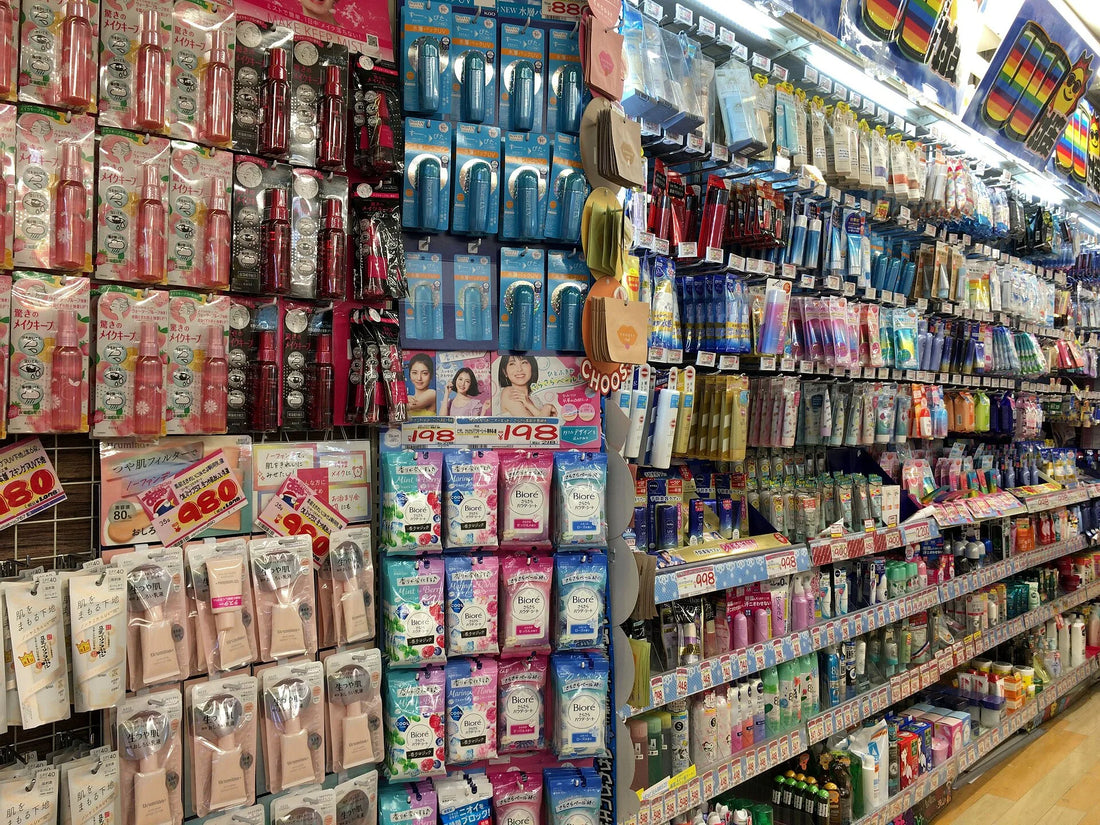
You went in for a phone charger at ten at night. You came out an hour later with face wash, three flavours of KitKat, a pack of heat patches and a bag you had to check in. Somewhere in the middle a song about the shop played twice. That was Don Quijote, the discount chain everyone in Japan calls Donki. It's the shop you searched for afterwards as Don Quijote Japan, and it's the same shop whether you spell it don kihote, donkihote or don quichotte.
The green sign reads 驚安の殿堂, kyōyasu no dendō: palace of shocking cheapness. It is the chain's slogan, not one shop's.
You can tell which Donki you were in from the outside of the building, and there's a good reason you lost that hour, plus a way to shop it next time without losing it. At the end, where to get the Donki things in Australia, because there's no Donki here and its online store doesn't ship here either.
Quick answer
- What it isA late-night discount chain selling snacks, cosmetics and household oddments in one dense shop. Everyone in Japan calls it Donki.
- What the name meansThe green sign reads 驚安の殿堂, kyōyasu no dendō, palace of shocking cheapness. It is the chain's slogan, not one shop's.
- Getting it hereThe building does not exist in Australia and the company lists no store here. What you can get is the basket, spread across the Japanese specialist grocers. What you can get here
Which Donki were you in?
-

MEGA Don Quijote Shibuya Honten (MEGAドン・キホーテ渋谷本店, honten meaning main store) — the Shibuya flagship
A white tower behind the Shibuya crossing, with a huge yellow MEGA ドンキ sign
MEGA is the family-sized format, so this one has a fresh-food floor too
-

Shinjuku Kabukichō (新宿歌舞伎町店) — the neon one
The red-fronted shop at the far end of Kabukichō's main street, Shinjuku's nightlife district
the one packed tightest with souvenir sweets and cosmetics
-

Akihabara (秋葉原店) — the one with the theatre
A tall building on Akihabara's main street, the electronics district, with AKB48 across the front
the pop group AKB48 has its theatre on the 8th floor, above the shop floors
-

Ginza Honkan (銀座本館, honkan meaning main building) — the one under the expressway
A low yellow shopfront under the expressway in Ginza, Tokyo's department-store district
the only Donki in Ginza, five minutes from Shimbashi station
-

Asakusa (浅草店) — the one with the penguin on the moon
A curved glass tower by Sensō-ji temple, with a penguin on a crescent moon
the penguin is Donpen, the chain's mascot since 1998
-

Dōtonbori (道頓堀店) — the one with the Ferris wheel
The Osaka shop with a Ferris wheel bolted to its face, on the Dōtonbori canal
the wheel is Ebisu Tower, after the god of luck painted on it
-

Namba Sennichimae (なんば千日前店) — the one by the comedy theatre
A grey block in Osaka's Namba, opposite the Namba Grand Kagetsu comedy theatre
the second big Osaka store, a few minutes from the Ferris wheel one
-

The inside of any of them (圧縮陳列, asshuku chinretsu) — the packed shelves
Shelves to the ceiling, hand-written yellow price signs, and an aisle with no visible end
Compressed display, and it's deliberate. The hour you lost is explained below
-

DON DON DONKI — the overseas one
A yellow-and-black DON DON DONKI sign inside a mall in Singapore, Bangkok or Taipei
same company, a Japanese-food shop rather than the discount jungle. None here, and none announced
Kyoto's big one, on Kawaramachi street, has no photograph on this page but is easy to place: it's the Donki that closes, at 1 am. There are flagships too in Ikebukuro and Ueno, both in Tokyo. Further out, there's one in Susukino, the nightlife district of Sapporo in the north, and one in Tenjin, the centre of Fukuoka in the south-west. There is one more on Kokusai-dōri, the main street of Naha, the capital of Okinawa, Japan's southern islands. Which one you were in matters less than which kind it was.
What is Don Quijote, and why is it called that?
Don Quijote is Japan's biggest discount chain, and the group behind it, Pan Pacific International Holdings, runs 799 shops, 676 of them in Japan. The company describes the shop as three things in one: a convenience store, a discount store and an amusement. A standard store carries about 45,000 different items, sells late into the night, and is laid out so that you find things by wandering rather than by reading a sign.
The name is from the Cervantes novel, and the company means it as a compliment to itself. Don Quijote, in its own words, is an action-driven idealist who refuses to bow to convention, and the founder wanted a new kind of shop with the same attitude. Japanese shortens it to Donki the way it shortens everything, and the romanised spellings you see online are all attempts at the katakana ドン・キホーテ.
The first shop opened in western Tokyo in 1978, and the late-night hours, the packed shelves and the hand-written signs all began there.
And the song you heard twice has a name: Miracle Shopping. The shops play it on a loop.
Is every Donki the same?
No, and this is the first thing that saves you time. The chain runs several formats under one name, and the two you'll meet are the standard Don Quijote and the MEGA Don Quijote. The standard store is the jungle: packed shelves, narrow aisles, cosmetics, snacks, medicines, party costumes, electronics, a little of everything and mostly no fresh food. The MEGA store is the family version, about 9,000 square metres, with a full supermarket floor of fruit, fish, meat and ready meals under the same roof. If you want groceries or a picnic, go to a MEGA; if you want the tourist floor, any flagship will do.
There are smaller ones too. Picasso is a small city-centre Donki with no car park and the same mix squeezed down. Kirakira Donki, in shopping malls, sells sweets and Asian cosmetics to teenagers and skips the rest. Soradonki is the airport version, at Haneda's international terminal. And 190 of the 676 Japanese stores are former supermarkets from a chain called Uny that Donki bought in 2019, often double-named MEGA Don Quijote UNY, which behave like supermarkets with a Donki section.
Not every Donki is open all night. Most open between 9 and 11 in the morning and close between midnight and 5 am. The flagship stores on this page are the 24-hour ones. Kyoto's closes at 1 am, and the supermarket-style stores keep supermarket hours, so check the store page before a 3 am run.
If you're wondering which is the biggest, it's not Shibuya. The largest Don Quijote in Japan by floor space is the MEGA store in Toyohashi, a city about halfway between Tokyo and Osaka on the bullet-train line, at 11,169 square metres. Tokyo's largest is a MEGA in Narimasu, a residential suburb in the north-west that no tourist visits. The famous ones are famous for where they are, not for their size.
Why did you lose an hour in there?
You didn't get lost because you're bad at shopping. The maze is the product. The packed shelving has a name in Japanese, asshuku chinretsu, compressed display. The company describes its purpose plainly: goods are lined up with no gaps so the shop becomes half a maze, and the customer is given the feeling of a treasure hunt. The company's own formula for the shop is convenience, discount and amusement, and the maze is the amusement. Being unable to find the exit is part of the entertainment, so the hour you lost was designed.
That's also why no two stores are laid out the same. The staff on each floor decide what to stock and where to put it, and they write the yellow price signs by hand. A head office plan would make the shop easy to read, and easy to read is what Donki has spent forty years avoiding.
The second thing you assumed is that you wandered into a shop for Japanese people. In the flagship stores you didn't. In its latest financial year, to the end of June, the group's tax-free sales, which by definition are sales to visitors, came to ¥228.6 billion, a record, up 31 per cent in a year. Ninety-nine stores each sold more than ¥100 million tax-free.
The company's own strategy documents talk about building tourist-destination retail and use the line "come to Japan, go to Donki". The Kabukichō store is the one packed with souvenir sweets because it's stocked for you. The same company sells groceries to Japanese families in 146 MEGA stores that most visitors never see, and those are the other nine-tenths of its business.
So the store is built to slow you down, and the flagship stores are built for exactly the shopping you were doing. Both of those are good news, because both can be planned around.
How to shop Donki without losing the hour
Go in with a list, and go to the right store. Decide before you go whether you want the tourist floor (cosmetics, sweets, medicines, souvenirs) or groceries, then pick a flagship for the first and a MEGA for the second. The big flagship stores have a tax-free counter; a small suburban Donki may not.
Go late. The flagships trade all night and the crowds thin after midnight. A Donki at 1 am is the same shop with the aisles to yourself, and on the walk back the Japanese convenience store on the corner is open as well.
Know the tax-free rules, because they're changing. Until the end of October, tax-free shopping works the way it did on your last trip. You show your original passport at the counter, not a photo of it, and spend ¥5,000 or more before tax in one store on one day. Food, cosmetics and medicines count as consumables: they go into a sealed bag that must stay sealed until you leave Japan, and the limit is ¥500,000 a day. Electronics, bags and clothes are general goods, with no sealed bag and no ceiling. Donki takes returns on tax-free goods within 30 days of purchase, and 90 days for a fault.
The switch is coming: on 1 November this year, 2026, Japan moves to a refund system. From that day you pay the full price including tax at the till, then show the goods and your passport to customs at the airport on the way out, within 90 days of buying them, and the tax is refunded. The sealed bags, the consumables limit and the split between the two kinds of goods are all abolished. The ¥5,000 floor stays. If you travel after that date, budget for paying the tax up front and getting it back at the end.
Skip the points card. The majica card and app is Donki's own loyalty scheme, with 21 million members, and it's built for people who shop there every week. The company has said a visitor version is coming; until it does, the tax-free counter is the discount that applies to you.
What people carry out. The company's own figures put sweets, toothpaste, everyday goods and cosmetics at the top of what visitors buy. It names two of its own bestsellers: Bake Creamy Cheese in a matcha flavour, a cheese sweet that stays firm in hot countries, and a roasted sweet potato spread from its house brand, Jonetsu Kakaku, "passion price". The classic returnee basket is Japanese KitKat flavours, Senka face wash, Biore sunscreen, Hada Labo lotion, Jagarico potato sticks and Roihi heat patches. Most of that basket can be refilled from Australia; the house brand can't.
Where to get Donki things in Australia
The building doesn't exist here, and the parent company's own store list, which covers Singapore, Hong Kong, Thailand, Taiwan, Malaysia, Macau, Hawaii, California and Guam, has no Australian line on it. What exists is the basket, spread across a few shops. The shops below were checked in September 2026. Any prices you find are theirs, not ours.
The basket, online
The Japanese specialist grocers carry most of what a returnee wants again. Jun Direct, Umall and JFC Online stock Senka Perfect Whip, the foaming face wash. Umall carries the Biore UV Aqua Rich sunscreens and Hada Labo lotions. Snack Affair and Genki Mart carry Jagarico, and Snack Affair carries the matcha KitKats. Ito En teas are at Jun Direct and Umall, and the Japan-only Cup Noodle flavours are at Jun Direct, Asian Pantry and Snack Affair. The house brand, Jonetsu Kakaku, and the Roihi Tsuboko heat patches are the two things on the list none of the six carry.
The shops with the Donki mix
Cosmetics, snacks and household goods under one roof is the Donki idea, and it exists in three cities. Every address opens the shop on Google Maps.
-
Perth
MIYU Japan
Calls itself the city's Japanese variety store. Three shops.
-
Melbourne
miau mall
Beauty, snacks, kitchen and bathroom goods, and character merchandise.
-
Brisbane
Genki Mart
A Japanese-owned grocer with a beauty aisle. Six shops; this is the original.
-
Sydney
Genki Mart
The chain's first Sydney shop, opened in 2025.
-
Sydney
Tokyo Mart
Japanese groceries and kitchenware since 1976. Its sister shops Fuji Mart in South Yarra, Woolloongabba, Southport and Subiaco carry the same range.
The last three are grocers first, so expect the food half of the basket and not the make-up.
For the hundred-yen half of Donki, the pens, the kitchen gadgets and the bath things, Daiso is the Japanese chain Australia does have. It has 32 shops across New South Wales, Victoria, Queensland, Western Australia, South Australia and the ACT, and no online store. No business in Adelaide, Canberra or the Gold Coast advertises a variety shop with the full Donki mix on its own page. If you know one, tell us and we'll check it.
Common questions
What is Don Quijote in Japan famous for?
Don Quijote in Japan is famous for selling almost everything, late at night, from shelves packed to the ceiling. Visitors know it for tax-free cosmetics, Japanese snacks and medicines, the penguin mascot Donpen, the store song that plays on a loop, and stores that stay open 24 hours in Shibuya, Shinjuku, Akihabara and Osaka's Dōtonbori.
Why is Japan's store called Don Quijote?
Japan's store is called Don Quijote after the hero of the Spanish novel by Cervantes. The company says it chose the name because Don Quijote is an action-driven idealist who refuses to bow to convention, and its founder wanted to create a new kind of shop with the same spirit. Japanese people shorten it to Donki.
Where is the biggest Don Quijote store in Tokyo?
The biggest Don Quijote store in Tokyo by floor space is the MEGA Don Quijote in Narimasu, a suburb in Itabashi ward, at about 8,600 square metres. The biggest in Japan is the MEGA store in Toyohashi, about halfway between Tokyo and Osaka, at 11,169 square metres. The famous Shibuya, Shinjuku and Akihabara stores are flagships because of where they stand, not their size.
Is Donki in Japan cheap?
Donki in Japan is cheap on some things and ordinary on others. Its slogan promises shocking cheapness, but the real case is its range and hours: one shop with cosmetics, medicines, snacks and electronics, open all night, with a tax-free counter. Compare a branded item against a drugstore before assuming the Donki price is the lowest.
Why is it called Don Don Donki overseas?
Don Don Donki is the name Don Quijote's parent company uses for its stores outside Japan, in Singapore, Hong Kong, Thailand, Taiwan, Malaysia and Macau. The first opened in Singapore in 2017. They're Japanese-food specialty shops in malls for local shoppers, not the all-night discount jungle you visited in Japan.
Does Don Quijote have an online store that ships to Australia?
Don Quijote doesn't ship to Australia. The store that appears in search as the DONKI Official Online Store is a cross-border shop aimed at China, and the company's own list of overseas stores has no Australian entry. There's no Don Quijote or Don Don Donki in Australia and none has been announced.
Where this leaves you
Seven shopfronts, one deliberate maze, a tax rule that changes in November, and a basket that mostly travels. We stock two pieces of that basket ourselves: Jagarico, the potato sticks in the cup, and the Cup Noodle sizes you saw on the Donki shelf, on our Japanese snack shelf.
If the sweets in that basket are the part you came home unable to name, our guide to naming Japanese sweets sorts them by what they look like.
If you're earlier in the journey than that, start here is the short version of what we carry.
Sources
- Pan Pacific International Holdings, company history — the 1978 shop, the 1989 Fuchū store, Jonetsu Kakaku in 2009, majica in 2014, the 2019 rename and the Uny purchase; the origin of the name and Donpen from its investor FAQ; the store concept and the MEGA format from its discount business page.
- Pan Pacific International Holdings, Factbook for the year to June 2026 — 799 stores, 676 in Japan, the format counts and the overseas list — and its results presentation — tax-free sales of ¥228.6 billion, 99 stores over ¥100 million, the majica membership and the visitor bestsellers; the strategy lines reported by Honichi, August 2026.
- Japanese Wikipedia, Don Quijote (company) — the compressed-display description and opening hours — with Takao Yasuda and Maimi Tanaka; the floor-staff merchandising from Nippon.com, July 2025.
- Don Quijote, tax-free shopping guide — the current thresholds, the sealed bag, the passport rule and the return periods; the refund system from 1 November from the Ministry of Finance, 2025 tax reform outline, and the National Tax Agency, tax-free shop notice.
- Don Quijote store pages for Shibuya, Shinjuku Kabukichō, Akihabara, Ginza, Asakusa, Dōtonbori, Namba and Kyoto, and the Ebisu Tower page; the largest stores from Ryūtsū Super News, October 2017 (Toyohashi) and Ryūtsū News, February 2024 (Narimasu).
- Australian availability checked in September 2026 on each business's own pages — Jun Direct, JFC Online, Genki Mart, Umall, Asian Pantry, Snack Affair, Daiso Australia, miau mall, MIYU Japan, Genki Mart's story and Jun Pacific.
Photographs, all from Wikimedia Commons: Shibuya by WhisperToMe (CC0); Kabukichō by Hikosaemon (CC BY 2.0); Akihabara by Farrell010427 (CC BY-SA 4.0); Ginza by Aimaimyi (CC BY-SA 3.0); Asakusa by C.L. Kao (CC BY-SA 3.0); Ebisu Tower by Dudva (CC0); Namba by Tokumeigakarinoaoshima (CC BY-SA 4.0); the shelves by 毒島みるく (CC0); DON DON DONKI by Eugene Ormandy (CC BY-SA 4.0).


