You had it at a festival stall, or it came to the table at a ramen shop: a small clear bottle with a glass ball stuck in its neck. Someone handed you a plastic plunger and told you to push. It fizzed over your hand, the ball rattled about, and you drank it anyway. You still don't know what the ball was for.
The drink is ramune (ラムネ), and the word is lemonade said by a Japanese mouth. It's a lemon-flavoured soda in a 200 ml bottle, sealed by that marble. Coming up: why the marble is there, how to open one without wearing it, and what it actually tastes like. And at the end, where to buy ramune in Australia, easier than you'd expect, because Woolworths carries it.
One surprise before the pictures. In Japan the word ramune names the bottle, not the drink. Take the marble away and the same soda is called something else. That's because the Japanese soft-drink trade sorts the two by the stopper: a marble makes it ramune, a cap makes it cider. That rule sorts out two things sold as ramune on Australian shelves that aren't.
Quick answer
- What it isA lemon-flavoured soda in a 200 ml bottle, sealed by a glass marble. The name is lemonade said by a Japanese mouth.
- The marble is the sealIt is not a toy and it was never loose. The marble is what held the fizz in, and the plunger pushes it out of the neck to open the bottle.
- Buying it hereOne of the few Japanese drinks to reach an ordinary Australian supermarket shelf, and every Japanese grocer in the country carries three or four flavours. Where to buy
Find yours
-

Ramune, original (ラムネ)
A glass marble trapped in the pinched neck of a small lemon-soda bottle
the body is glass; the neck and cap have been plastic since 1989. Bī-dama means glass marble
-

Melon ramune (メロンラムネ)
The same bottle, bright green
every flavour comes in the same bottle, so the colour is the flavour
-

Strawberry ramune (いちごラムネ)
The same bottle, pink
lychee, grape, orange, yuzu (a Japanese citrus), blueberry, watermelon and white peach are the others you'll meet in Australia
-

"Ramune flavour" in a metal bottle (ラムネ味)
A tall aluminium bottle with a screw cap saying ramune, and no marble
Sangaria's Ramu Bottle, at Woolworths and Japanese grocers; same taste, and by Japan's rule not a ramune
-

Ramune candy (ラムネ菓子)
Chalky pastel tablets, often in a little pack shaped like the bottle
a glucose sweet named after the drink, not a solid form of it; our guide to ramune candy
Why does ramune have a marble in it?
The marble is the cap. There's no other seal in the bottle. The gas in the soda pushes the marble up against a rubber ring inside the mouth, and the pressure holds it there until you push it down. That's the whole trick, and it's not Japanese.
An English engineer, Hiram Codd, patented the bottle in 1872. It's filled upside down, so the gas holds the marble out of the way, and it seals itself the moment it's stood upright. It caught on across Britain, India and Australia. Rowlands, an aerated-water maker with factories in Ballarat, Melbourne, Sydney and Newcastle, was still filling marble bottles in 1921, and they went out on paddle steamers as refreshments.

Then the crown cap arrived, the crimped metal cap still on every beer bottle, and the marble bottle disappeared almost everywhere. Two countries never switched: India, where a marble-bottled soda called banta is still sold, and Japan, which turned the bottle into a national drink. Why it didn't is a story about small factories, and it's further down. First, the part you came for.
How do you open a ramune bottle?
The label on a Japanese bottle gives four steps, and the fourth is the one everybody skips.
- Chill it well first. A warm bottle foams over no matter what you do.
- Lift the plunger off its ring. The green or blue cap on top is two pieces: an outer ring and a small plastic press, called a tama-oshi, "marble pusher", sitting inside it. Peel the seal, then pull the press out.
- Stand the bottle on a table and press the marble down hard with the heel of your hand. It drops with a pop. Do this over a sink the first time.
- Keep pressing for a few seconds until the fizzing settles. Lift off too early and the foam comes up through the neck. This is the step that keeps it in the bottle.

Now drink it the right way. Look at the neck and you'll see two dents pressed into the glass. Turn the bottle so those dents are on top when you tilt it. The marble rolls into them and stays out of the mouth. Hold it the other way and the marble rolls back to the mouth and blocks the flow, which is why your first ramune came out in gulps.
Are you supposed to take the marble out? No. The neck is narrower than the marble, so it can't come out without breaking the bottle. It went in before the neck was formed, and it stays.
What does ramune taste like?
Lemon, by definition. Japanese dictionaries define ramune as carbonated water flavoured with lemon and sugar, and the original in the finder above is that: a sweet, light lemon soda, fizzier than it looks. Many people taste bubblegum or Sprite in it. That's the sweetness, not a bubblegum flavour. The bubblegum one exists, but it's a separate flavour.
The flavoured ones are the same soda with a fruit flavour and a colour. Melon and strawberry are the two you'll see most. On Australian shelves you'll also find lychee, grape, orange, yuzu, blueberry, watermelon, pineapple and white peach. Japan goes much further. Kimura, a maker in Shizuoka, on the coast south-west of Tokyo, brought back its curry ramune in 2026, and people buy it.
A bottle holds 200 ml, which is a little over half a can of soft drink. Nobody drinks ramune for the volume.
Is ramune a drink, or a bottle?
A bottle. The Japanese soft-drink trade's own rule says so. Ramune and saidā, the word Japan uses for a clear lemon-lime soda, are the same kind of drink. They're told apart by the stopper. A marble makes it ramune. A crown cap or a screw cap makes it cider. The trade association calls them brothers, and Japan's Fair Trade Commission wrote the same rule down in 1978: the name ramune belongs to a carbonated drink filled into the marble bottle.
That rule reaches the shelf you shop from. Sangaria's Ramu Bottle is a 500 ml aluminium bottle with a screw cap. It says ramune, it tastes like ramune, and Woolworths and Japanese grocers both carry it. It has no marble. By Japan's own definition it's ramune flavour, not ramune. The same goes for the candy, a glucose tablet that borrowed the name in the 1940s, and for anything else labelled ramune flavour, our own jelly drink included. All of them carry the taste. None of them is the thing.
The reverse holds too. Mitsuya Cider, Japan's best-known clear soda, is cider because it comes with a cap. Fill it into a marble bottle and it would be ramune. If that seems backwards, remember what you paid for: the bottle is the product, and the soda comes with it.
Why did Japan keep the marble bottle?
Because the people making it were small, and they were protected. The bottle reached Japan from Britain in 1887, about twenty years after Fujise Hanbei, a maker in Nagasaki, a port city in Japan's south-west, first sold the drink in 1865 as lemon water. By 1892 a glassworks in Osaka was making the bottles at home.
The drink grew into a summer thing. It's sold at festival stalls standing in tubs of iced water, a few steps from the dango skewers built to survive being carried around one, and at the dagashiya, the corner shop that sells sweets to children for pocket money. In 1953 ramune was more than sixty per cent of every carbonated drink made in Japan, from an estimated two thousand or more small makers. Today it's under a fifth of that.

What saved it was an agreement. In 1977 Japan passed a law letting small firms ask big ones to stay out of their fields, and the soft-drink industry named ramune as one of those fields. The big makers have stayed out ever since. It's a customary rule rather than a ban, but it means every marble bottle you've ever opened came from a small company. Hata, in Osaka, says it's the largest of them, at about 650,000 bottles a day.
The bottle itself has changed under you. Making an all-glass marble bottle stopped in Japan in 1989, because the runs had become too small, and the bottle on the shelf since then has a glass body with a plastic neck and cap. The all-glass one came back in 2025, when Hata launched one after twelve years of development, complete with a hand-carved wooden press. The glass bottle you think of as traditional is the new one.
Where to buy ramune in Australia
Here's the good news promised at the top. Ramune is one of the few Japanese drinks that made it onto an ordinary Australian supermarket shelf, and every Japanese grocer in the country has it in three or four flavours.
Checked in September 2026 on each retailer's own online store. A name is where to look, not a promise it's on the shelf today, and the prices below are a rough guide rather than a quote.
At the supermarket
Woolworths carries Kimura's original in the 200 ml marble bottle, listed as Ramune Lemonade, and Sangaria's 500 ml Ramu Bottle, the metal one with no marble. A single marble bottle runs around $3.
At a Japanese grocer, online or in the shop
The Japanese grocers carry the range. JFC Online lists Hata's original in singles and cases of thirty, Tomomasu's white-peach Hakuto, and Kimura's lychee. Jun Direct carries Hata's strawberry and pineapple by the case, Sangaria's 500 ml, and the Morinaga candy. Asian Pantry has Hata in nine flavours, and Premium Co Groceries runs a whole ramune shelf across Hata, Kimura and Sangaria, blue cola included. Umall has Hata's lychee, blueberry, melon and white peach. A single bottle runs around $3 to $4, a case of thirty roughly $60 to $80, and the candy about $1.50 to $3 a pack.
Two of those grocers have shopfronts you can walk into. Both list ramune on their own websites.
-
Sydney
Genki Mart
A Japanese grocer with Sangaria's Ramu Bottle on the drinks shelf; also in Brisbane, at Charlotte Street and Adelaide Street in the city and four suburbs.
-
Melbourne
Ichiba Junction
A Japanese grocer with a ramune section, Hata's original, melon, pineapple and strawberry in singles and cases; also in Alexandria and Ryde in Sydney, and Eight Mile Plains and Molendinar in Queensland.
Common questions
Why does ramune have a ball in it?
Ramune has a ball in it because the ball is the bottle's stopper. Gas pressure from the soda holds the glass marble up against a rubber ring in the mouth, sealing the bottle until it's pushed down. The design is an English patent from 1872 that most countries abandoned for the metal crown cap. Japan kept it.
Are you supposed to take the marble out of ramune?
You're not supposed to take the marble out of ramune, and you can't do it without breaking the bottle. The marble goes in before the neck is formed, and the neck is narrower than the marble. Push it down to open the bottle, drink with the two neck dimples uppermost, and leave it where it is.
What flavour is ramune supposed to be?
Ramune is supposed to be lemon. Japanese dictionaries define it as carbonated water flavoured with lemon and sugar, and the original flavour is a sweet, light lemon soda. Many people taste bubblegum in it, which is the sweetness rather than a bubblegum flavour. Melon, strawberry, lychee and grape are the common fruit versions.
Does ramune have alcohol in it?
Ramune doesn't have alcohol in it. It's a soft drink, a carbonated lemonade, and the bottles sold in Australia are alcohol-free. The word cider, which comes up beside it, means a clear soft drink like Sprite in Japan, not the alcoholic apple drink it means in Australia.
How much does a bottle of ramune cost in Australia?
A bottle of ramune costs around $3 to $4 in Australia, for the standard 200 ml marble bottle, and a case of thirty runs roughly $60 to $80. That's several times the price per litre of a big bottle of soft drink. You're paying for a 200 ml glass bottle shipped from Japan, and for the marble.
Where this leaves you
The word to say in a shop is ramune, and the thing to look for is the marble. If it has a marble, it's ramune. If it doesn't, it's ramune flavour, which is fine, but it's not what you had at the festival.
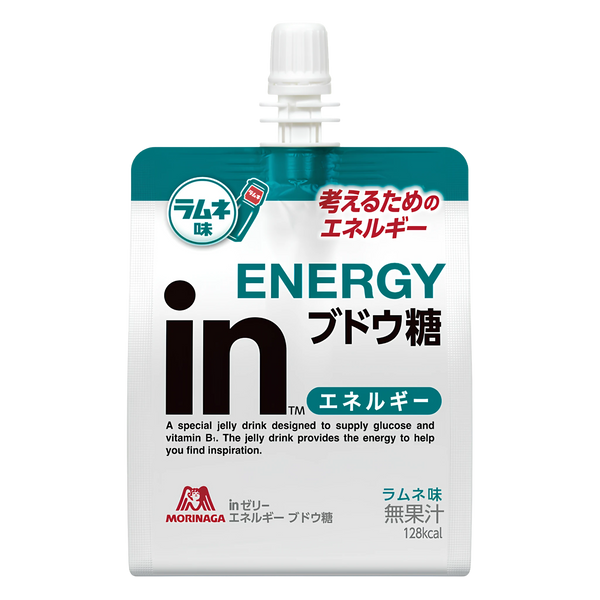
You'll not find the bottle in our shop, and here's why: glass under pressure doesn't travel well in a satchel, and a supermarket already sells it for around $3. What we carry is one thing that borrows the taste: Morinaga's in Jelly Ramune, a jelly drink in a pouch with the ramune flavour and none of the fizz. It sits with the rest of our Japanese drinks and tea. If Japanese food is new to you, start here. And if you find a flavour on a shelf that this page missed, tell us which one and where.
Sources
- Japan Soft Drink Association (全国清涼飲料連合会), ラムネとサイダーの違い — the stopper rule; also its pages on the name and the 1865 Nagasaki maker, the 1953 peak, the 1977 small-business rule and the end of the all-glass bottle in 1989.
- National Federation of Soft Drink Co-operatives (全国清涼飲料協同組合連合会), ラムネの定義 — the definition, and the Fair Trade Commission's 1978 wording.
- National Diet Library, Reference Cooperative Database — the two accounts of bī-dama and the 1892 Osaka glassworks; the Japanese dictionary portal kotobank, ラムネ — the dictionary definitions and the seal mechanism.
- Flagstaff Hill Maritime Museum, via Victorian Collections, Codd neck bottle, E. Rowlands, 1921 — the 1872 patent, how the bottle is filled and opened, and Rowlands' Sydney and Melbourne factories; English Wikipedia, Codd-neck bottle — the crown cap, and India's banta.
- Hata Kosen, HATA PREMIUM — the 2025 all-glass bottle and its development; Tombow Beverage, ラムネの起源 — the 1887 import; Kimura Drink, 木村飲料 — the curry ramune relaunch.
- Sangaria, ラムボトル — the recappable bottle-can; Japanese Wikipedia, ラムネ (錠菓) — the candy's dates.
- Australian availability, checked September 2026 on each retailer's own online store: Woolworths, JFC Online, Jun Direct, Asian Pantry, Umall, Premium Co Groceries, Genki Mart and Ichiba Junction.
Photographs — all from Wikimedia Commons, used under the licences shown: Top photograph by Oleg Yunakov (CC BY-SA 4.0); Ramune, original by AlexanderKlink (CC BY 4.0); Melon ramune by BrokenSphere (CC BY-SA 3.0); Strawberry ramune by Piperpet (CC BY-SA 4.0); Ramune flavour in a metal bottle by Radzkore (CC BY-SA 4.0); Ramune candy by Degueulasse (CC BY 3.0); A Sydney marble bottle by S. Rohrlach (CC BY 2.0); The dimples by BrokenSphere (CC BY-SA 3.0); A festival stall by Jim Epler (CC BY 2.0).