



Product information
About
This is a packet of ramen you cook in a saucepan, not a cup you pour water into. Tantanmen (tan-tan-men) is the Japanese take on Sichuan dan dan noodles, and it is a sesame dish before it is a chilli one: ground sesame and sesame paste are the first two things in the soup, and the chilli sits behind them. Rich, nutty, mildly hot.
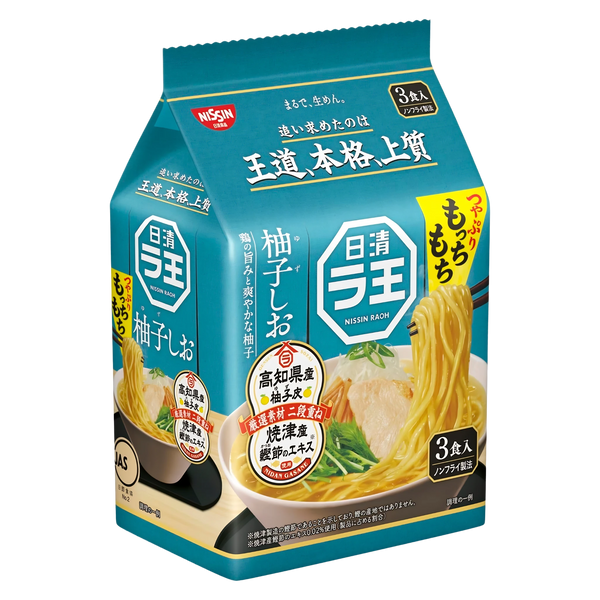
On the pack: 日清ラ王 担々麺.
If you have seen "Raoh" in a supermarket, that is a different pack. Woolworths ranges a Raoh-branded five-pack of single-serve noodles; the retailers listing it give its country of origin as Vietnam, and the packaging is printed for another market. This is the Japanese-market pack: made in Japan, three larger servings rather than five small ones. Same brand and the same logo, genuinely different product.
What you're getting
- Sesame is the lead, not chilli. Ground sesame and sesame paste give it a thick, nutty richness that carries the bowl, and it is the sesame that keeps the chilli in check rather than the other way round.
- It is milder than the red packaging suggests, and the Sichuan pepper will not make your mouth tingle. The pepper is in there for its scent rather than for heat, and the chilli is moderate. If you have had a properly numbing mala noodle, the mouth-buzzing Sichuan kind, this is not that, and Nissin makes a separate product for it. If you want real heat, add your own.
- Two sachets, not one: a powder that dissolves in the broth and a finishing paste that goes in last. It gives the bowl more depth than a single sachet would, and it means you can add the paste to taste rather than all at once.
- The noodle is non-fried, steamed and dried rather than flash-fried in oil, and three-layered with durum wheat through the middle. Expect a fine, springy noodle rather than a thick one.
- Three servings in the bag, and nothing else, no dried vegetables, no meat. It is built to have something added to it.
- One serving carries near a whole day's worth of salt by the World Health Organization's guideline. Nissin publishes the split, which is genuinely useful: most of it is in the broth, so leaving the soup leaves most of the salt.
- Allergens: contains wheat, egg, milk, peanut, sesame and soy. Peanut is declared on the pack but is not in the ingredient list, so our ingredients panel does not show it: on peanut, trust the allergen list. Read the pack's own label before you rely on ours.
The one thing to get right: do not pour the cooking water away. You boil the noodles in a measured 450 ml, then tip that water into your bowl over the powder sachet and add the noodles, then the paste, last of all. The water is the broth. This is the opposite of the yakisoba trays we also sell, where draining is the whole method. Nothing goes down the sink.
Two more things. Pour the water in steadily: the powder can leave lumps if it goes in too fast. And the pack is the Japanese-market one, so the method is set out in full above, in English.
Ingredients
The maker's ingredient list, translated from the Japanese pack. Anything after the break is an additive — the Japanese label lists those separately.
Noodles (wheat flour (milled in Japan), salt, vegetable oil, chicken seasoning, egg powder); soup (sesame, sesame paste, sugars, salt, vegetable oil, emulsified oil, powdered soy sauce, lard, spices (Sichuan pepper, chilli), dextrin, hydrolysed protein, pepper seasoning)
modified starch, flavour enhancer (amino acids etc.), kansui (alkaline noodle salts), calcium phosphate, flavouring, thickening polysaccharide, acidity regulator, caramel colour, carotenoid colour, ethyl alcohol, antioxidant (vitamin E), spice extract, vitamin B2, vitamin B1.
The printed label on the pack is always the authority on ingredients and allergens, not this page — please read it in full before you rely on our summary. If you are unsure about an ingredient, contact us.
Allergens
The maker declares:
- Allergens
-
- Wheat
- Egg
- Milk
- Peanuts
- Sesame
- Soy
The printed label on the pack is always the authority on ingredients and allergens, not this page — please read it in full before you rely on our summary. If you are unsure about an ingredient, contact us.
Details
- Maker
- Nissin
- Made in
- Japan
- Net contents
- One bag: 264 g, three servings, of which 219 g is noodles
Our guide
How to eat it
- Bring 450 ml of water to a full boil in a saucepan and cook one noodle cake for about four minutes. Bite a strand near the end and take it off when it is as firm as you like: that beats trusting the clock. Meanwhile put the POWDER sachet into your empty bowl; never into the pan.
- When the noodles have loosened, pour the hot water from the pan into the bowl FIRST and stir the powder through it: steadily, or it can leave lumps. The noodles go in next, and the PASTE goes in last of all. Nothing is drained away: that cooking water is your broth.
- The paste is the chilli, so add it to taste rather than all at once: taste as you go and stop where you like it, especially on a first bowl.
Good to know
- Nothing comes in the bag. Pork mince is the addition that makes it, and the pack's own artwork shows bok choy; both are supermarket items, as are spring onion and a soft-boiled egg.
- Cooking vegetables in the same pan? Use a little less water, around 400 ml, because they let out their own. Store the bag at room temperature, out of direct sun and away from anything strongly scented.
In their own words
What Japanese buyers say
What do the numbers mean?
Counts of how many reviews mentioned each thing, not a score. One review can mention several. Every quote is our translation, with the original Japanese beneath it.
- What they like
The soup is loaded with sesame and has real depth, and the fine noodles have a good spring to them.
胡麻たっぷりのスープにコクがあって 細めの麺も弾力あって美味しい
- What they grumble about
The chilli oil and sesame paste in the seasoning sachet are what make it taste like tantanmen. Getting it out of the sachet is the drawback, though. The noodles are chewy and delicious.
調味ペーストのラー油とねりごまが担々麺ぽくしてる。 出しにくいのが難点だけど。 麺はもちもちで美味しいです。
from monolog
- What they like
The sesame flavour is irresistibly good. A solid soup and the mellowness of sesame, finished at an absurdly golden ratio.
ゴマの風味がたまらなく美味しい。しっかりしたスープにゴマのまろやかさがとんでもない黄金比で仕上がっています。
- What they like
Taste-wise it isn't hot, but your body gradually warms up. In balance it's sesame first and chilli second, so it's approachable even for people who don't like heat.
味覚的には辛く無いが徐々に身体が暖まってくる感じ! バランス的には辛味より胡麻味がメインで苦手な人にも食べやすくなっている。
- What they grumble about
Cooked with the water as directed it came out thin, probably because I was cooking vegetables in with it. So 400 mL might be just right.
規定通りの水で調理すると野菜などの具も一緒にしてるせいか薄かったです。なので400㎖が丁度良いかもです。
from monolog
- What they like
I can't eat the super-hot stuff but I like a bit of heat, and this is just about right.
激辛系は食べれないけど少し辛いのが好きで、このくらいがちょうどいい
mentioned in 12 of 110 reviews we read
- What they like
I like heat but can't do too-hot, and this was exactly right. Making tantanmen yourself means buying a pile of seasonings, and it's not worth eating out for — so I'm glad it exists as an instant noodle.
辛味が好きだけど辛すぎるのは無理な私にはちょうどいい辛さでした!担々麺って自分で作ろうと思うと調味料揃えるの面倒だし、外食するまでもないなと思ってたのでインスタントラーメンであってよかったです
- What they grumble about
Bought it because I fancied tantanmen. Personally it wasn't hot at all. But it was easy to eat and tasty.
担々麺が食べたくなって購入。個人的には全く辛くなかったです。でも、食べやすくて美味しかったです
mentioned in 4 of 110 reviews we read
Our tip: This is the direction the complaints run. Nobody in the corpus we read said it was too hot — so if you want real heat, add your own chilli oil.
- What they like
With two seasoning sachets, including a finishing sauce, there's depth to the flavour. Completely different from other makers' single-sachet products.
調味袋2つ入りで後がけのタレがある分、味に深みがある。別メーカーの小袋1つのものとは全く違った。
- What they grumble about
If it came with dried toppings I'd weep with joy, but that costs money so I can't be greedy. The quality of the noodles, and above all this tantanmen's soup, deserves praise.
かやくが入っていれば感涙物なのですが、如何せんコストがかかるので贅沢は言えません。麺と、取り分けこの坦々麺のスープのクオリティの高さは個人的には賞賛されて然るべしと思います。
- What they like
The chewy, slippery noodles are just like fresh noodles and very good, with a well-judged heat. I didn't add all of the seasoning — I tasted as I went and stopped at my own preferred heat.
生麺のようなもちもち、つるりとした麺がとても美味しく、適度な辛さで美味しかったです。私は調味料(香辛料?)は全部は入れずに味見しながら自分好みの辛さで止めました。
- What they like
I didn't like the noodles when the Raoh series launched and stayed away for years, but eating it for the first time in over 20 years, the noodle quality has improved a great deal!
ラ王シリーズ、出た頃の麺は気に入らなくて長年食べてなかったけど、20年以上ぶりに食べたら麺の質がだいぶ改良されてて美味しかった!
- What they grumble about
It was good, but I was surprised it's a powder soup rather than a liquid one. Lumps were left behind, so I'd prefer a liquid soup.
美味しかったけど、液体スープじゃなくて粉末スープって最近見なかったので驚きました。だまが残ってたので液体スープの方が良いな。
- What they like
Bought it thinking a bagged tantanmen is unusual. It doesn't hog the freezer the way frozen food does, and I love being able to have tantanmen the moment I feel like it. Not too hot either — delicious.
袋麺で坦々麺は珍しいなと思い購入。冷凍食品みたく冷凍庫を占領しないし思い立ったら坦々麺を食べられるのが嬉しいです。味も辛すぎず美味しい。
from monolog
- What they like
Of all the Raoh flavours this tantanmen is my favourite! I add pork mince, a boiled egg and spring onion.
ラ王のなかで、私はこの担々麺が1番好きです! ここに、そぼろ、ゆで卵、ネギを入れて食べます。
from monolog
- What they grumble about
Saltiness is stronger than either the sesame aroma or the heat; depth and savour are zero. Disappointing precisely because I expected more from Raoh.
胡麻の風味や辛味より塩味が強くて、コクや旨みはゼロ。ラ王だからと期待していたからこそ残念な味でした。
- What they like
So good I drank all the soup. It has body, so it goes well with egg.
美味しくて、スープを全部飲んでしまいました。 とろみがあるので卵に合います。
from monolog
Real quotes from Japanese review sites, translated by us. We show no star rating from those sites.
The maker
Where it comes from
- Nissin
Raoh started in 1992 as Japan's first shelf-stable "fresh-style" cup ramen: a soft noodle in a pouch rather than a dried block. Nissin discontinued it in August 2010, then relaunched the brand three weeks later on a new non-fried noodle built in three layers. The bagged version followed in 2012.
The whole brand is an answer to one question: whether a packet noodle can eat like a ramen shop's. Every generation of it has been another attempt at the same thing, and the noodle is where the effort goes.
Product facts here are checked against the maker's own page: nissin.com (opens in a new tab)
Often bought together
-

Nissin Raoh Tantanmen — Japanese Sesame & Chilli Ramen Packet, 3 Servings, 264g
$8.80
You are on this one
