

-
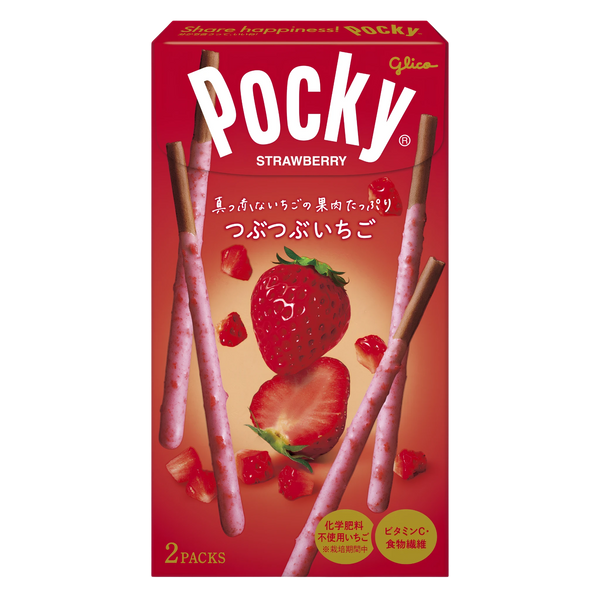 Glico Strawberry Pocky Tsubutsubu Ichigo — 2 Packs$5.45
-
 Glico Pocky Gokuboso Thin Chocolate Sticks — 2 Packs$5.10
-
 Glico Pocky Cacao 60% Bitter Chocolate Sticks — 2 Packs$5.99
-
 Glico Pocky Two-Layer Cacao Chocolate Sticks — 2 Packs$5.49
-
 Glico Salted Caramel Pocky — Winter Edition, 2 Packs$6.33
-
 Glico Coconut Pocky — Chocolate Sticks, 2 Packs$7.37
-
 Glico Choco Mint Pocky — Mint Chocolate Sticks, 2 Packs$7.37
-
 Glico Matcha Pocky 2-Layer Uji Green Tea — 2 Packs$8.30
-
 Glico Pocky Almond Crush Chocolate Sticks — 2 Packs$5.45
-
 TRY ME!Glico Japanese Pocky Chocolate Sticks — 2 Packs$5.10


Product information
About
A matcha Pocky where the matcha is in the biscuit as well as the coating: the stick itself is green, with matcha worked into the dough, under a chocolate made with stone-milled matcha. It tastes clearly of green tea rather than of green-tea flavouring: more sweet-edged than bracing, though the matcha does deliver for most people. It is the approachable one of the two matcha boxes we sell. Buy it if you want matcha you can eat a whole bag of; if you want the richer, thicker-coated version, the two-layer box is the one, though be warned that its own buyers split on whether it is actually as astringent as its name claims.
ポッキー<濃い深み抹茶>: koi fukami matcha, roughly "deep, rich matcha". Matcha is powdered green tea.
What you're getting
- Two kinds of matcha, not twice as much. You will see this sold in English as "double the green tea". It is a mistranslation: 二種の抹茶 means two kinds. One is ground on a stone mill and goes into the chocolate; a second, more bitter one is kneaded into the biscuit. Glico names Uji matcha. Uji, near Kyoto, is the region Japan most associates with it.
- The biscuit is green, and you taste the matcha in it. It snaps like any other Pocky; what changes is that the bitter edge comes up through the stick instead of sitting only on the outside.
- How strong is it, honestly. The matcha delivers for most palates, and a real minority find the pack promises more than it gives: the word that falls short is bitter, not matcha. If you read matcha desserts as usually too sweet, you will probably like it. If you drink your matcha unsweetened, temper your expectations.
- It is a spring seasonal in Japan, run once a year since 2017 and not made the rest of the time. What is on the shelf is what there is until the next run.
- There is caffeine in it, as there is in any real green-tea product. Glico declares it on the pack, which it does not do on most Pocky.
- Allergens: contains milk, wheat and soy. The same production line also runs egg and peanut products. Read the pack's own label before you rely on ours.
Three things to clear up before you order. First, we sell two matcha Pocky and their Japanese names differ by one character. This is 濃い深み: koi fukami, "deep", and the other is 濃い渋み, koi shibumi, "astringent", built in two chocolate layers over a cocoa biscuit and more thickly coated. Second, the matcha Pocky Australian supermarkets range is a different, smaller pack made for export, and its own retailer describes the coating as a green tea cream; this box's ingredient list names cocoa butter. Third, Glico has quietly made this box smaller twice since 2019 and most sellers still list an older, larger pack. This is the current one. Keep it below 28 °C and out of direct sun; it is chocolate on a stick, and a hot letterbox will show.
Ingredients
The maker's ingredient list, translated from the Japanese pack. Anything after the break is an additive — the Japanese label lists those separately.
Wheat flour (domestically milled), sugar, lactose, cocoa butter, whole milk powder, vegetable oils and fats, shortening, matcha, wheat protein, salt, yeast
emulsifier, flavouring, seasoning (inorganic salt), raising agent. Contains milk, wheat and soy.
The printed label on the pack is always the authority on ingredients and allergens, not this page — please read it in full before you rely on our summary. If you are unsure about an ingredient, contact us.
Allergens
The maker declares:
- Allergens
-
- Milk
- Wheat
- Soy
- May contain
-
- Egg
- Peanut
Not ingredients — these are made or handled on the same equipment as this product, so traces are possible. We list every shared-equipment allergen the maker declares.
The printed label on the pack is always the authority on ingredients and allergens, not this page — please read it in full before you rely on our summary. If you are unsure about an ingredient, contact us.
Details
- Maker
- Glico
- Prefecture
- Osaka
- Made in
- Japan
- Net contents
- Two sealed bags — 52.8 g in total
Our guide
How to eat it
- Eat it cold if you can: chilling firms the chocolate and sharpens the snap, and it is a common way to have it through a Japanese summer.
- There are two sealed packs inside, so one can stay closed until you want it.
- Hold it by the bare end; that uncoated tip is what the whole format was designed around.
- Keep it below 28 °C and out of direct sun. Glico's own instruction. Sticks left in the heat can fuse together in the bag.
In their own words
What Japanese buyers say
- What they like
From the chocolate right through to the stick the matcha flavour carries all the way — superb.
「チョコから棒にかけて全体的に抹茶の風味が広がってて絶品。」
from monolog
- What they like
I love it. I really love matcha. The sweetness is moderate and it's good. I like that little snap. The depth of the matcha is lovely.
「大好きなんです。抹茶大好きなんです。甘さがほどほどでおいしい。ポキってする感じか好きなんです。抹茶の深みがいいですね。」
from mognavi
- What they grumble about
This is not "deep rich matcha"!
「濃い深み抹茶ではない❗️」
from monolog
- What they like
I don't get on with matcha, but I can eat this and it's good!
「抹茶苦手だけどこれは食べられるし美味しい!」
from monolog
- What they like
I buy it again and again.
「リピート買いしております」
from monolog
- What they grumble about
It says "deep and rich" on the pack but it's completely sweet!
「濃い深みって書いてあるけど全然甘いです!」
from monolog
- What they like
Pleasantly bitter and delicious 😋
「ほろ苦くて美味しい😋」
from monolog
- What they like
The matcha is rich and delicious ♡ I wish they'd put a few more sticks in.
「抹茶が濃厚で美味しい♡ もう少し本数増やして欲しい」
from monolog
- What they grumble about
Has the matcha got weaker…?
「抹茶感うすくなったかな…」
from monolog
- What they like
Not thinly sweet — solidly sweet matcha. Being Pocky, it goes down crisply.
「薄く甘くでなくてガッチリ甘い抹茶味でした ポッキーなのでサクサクいけます」
from monolog
- What they like
The matcha is strong, but the biscuit part could be thinner.
「抹茶は濃いけど、クッキー部分が細くてもいいかも」
from monolog
- What they grumble about
A snack for my matcha-loving son. A good amount — not so much you overeat — but the price is on the high side…
「抹茶好きな息子のおやつ。食べ過ぎなくていい感じの量ですが、お値段は高め…」
from monolog
- What they like
Sweeter than I expected, but good.
「思ったより甘かったが美味しかった」
from monolog
Real quotes from Japanese review sites (monolog, mognavi), translated by us. We show no star rating from those sites.
The maker
Where it comes from
- Glico
- Osaka
Pocky began in 1966, when Glico dipped one of its Pretz, a savoury biscuit stick, in chocolate, leaving one end bare so it could be picked up. The handle is the original idea.
This one is a spring thing. Glico has brought it back almost every February since 2017, and the construction has stayed the same across ten runs: matcha kneaded into the pretzel dough so the stick itself is green, then a chocolate carrying a second matcha, stone-milled. Stone mills turn slowly and stay cool, and Glico's word for what that preserves is kaoru: aromatic.
Product facts here are checked against the maker's own page: glico.com (opens in a new tab)
Often bought together
-

Glico Matcha Pocky Koi Fukami — Uji Green Tea, 2 Packs
$6.10
You are on this one
